
6 Warning Signs Your Chevrolet Engine Needs Fresh Oil
Every Chevrolet vehicle is engineered for long-term reliability. Whether you're navigating the daily commute down Route 6N, heading past Edinboro University, or taking a weekend trip out of Erie County, your Chevy is built to perform.
However, just like a human body reacts
to dehydration or low blood pressure, your vehicle gives off subtle diagnostic
clues when its core systems need attention.

The most common issue a vehicle faces isneglected engine oil. If you
aren't strictly adhering to your factory-recommended Chevrolet maintenance schedule oil change interval, your engine will
eventually begin to exhibit severe performance symptoms.
The service team at Rick Weaver Chevrolet has put together this breakdown to help you spot the 6 definitive signs that your engine is crying out for fresh Chevrolet oil and a brand-new Chevrolet oil filter.
The 6 Signs
Your Chevy Needs an Oil Change
1. Dashboard Warning Alerts (OLS or Oil Pressure
Indicator)
The absolute easiest way to diagnose an
oil issue is when your dashboard does the talking. When your dashboard display
drops below 15% Oil Life, your car is telling you that the additives inside the
oil are nearly spent.
However, if the red oil can symbol (Oil Pressure Warning Light) pops up, this is a
critical emergency.
It means oil is not reaching the upper
channels of the engine, usually due to dangerously low levels or a failing oil
pump. If this light stays on, pull over and shut down the engine immediately to avoid seizing the motor.
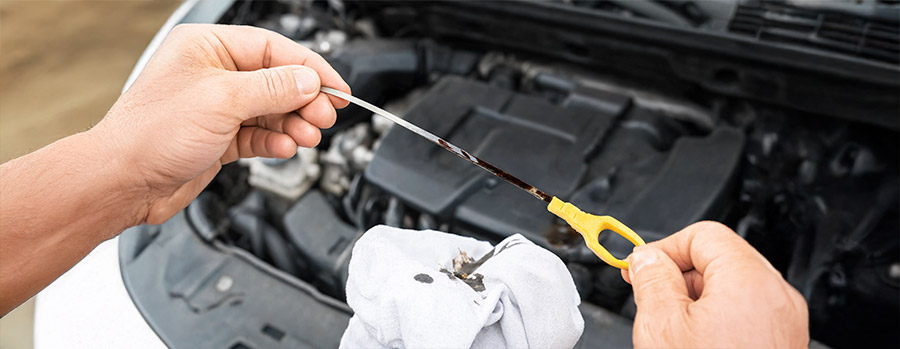
2. Dark, Gritty, or Textured Oil (The Dipstick Test)
Healthy engine oil should have a clear,
translucent, amber-like color, resembling fresh honey. As it collects debris
and experiences thermal breakdown, it naturally darkens.
Diagnostic Tip: Pull out your engine oil dipstick, wipe it completely clean on a white
lint-free cloth, reinsert it fully, and pull it back out. If the fluid is pitch
black, thick, or feels gritty when you rub a tiny drop between your thumb and
forefinger, it has reached its maximum particle capacity. It can no longer
clean your engine and must be replaced.
3. Loud Engine Knocking, Ticking, or
Rumbling
When oil loses its viscosity, the
protective liquid barrier wears thin. Without that cushion, precision metal
components start making physical contact. You might notice a sharp
"ticking" or "tapping" sound coming from the valve train when
you first start your vehicle or while idling at a stoplight.
If this progresses into a heavy, deep
metallic knocking or rumbling sound, your engine bearings are wearing out due to oil starvation. This is a severe
symptom and a direct precursor to total engine failure.
4. Thermal and Olfactory Warnings (A
Burning Oil Smell)
Smelling burning oil while sitting
inside the cabin is a major red flag. This symptom usually points to one of two
physical issues: either your Chevy has an active oil leak dripping onto hot
exhaust components under the hood, or the engine is running dangerously hot
because the old, broken-down oil can no longer dissipate heat.
If you experience this scent alongside
a rising temperature gauge, your vehicle requires immediate professional
intervention.
5. Excessive Visual Tailpipe Exhaust
Smoke
While it's perfectly normal to see
light, translucent white-water vapor coming from your tailpipe during cold
Pennsylvania mornings, true smoke is a different story. If you look in your
rearview mirror and see blue, gray, or heavy dark smoke billowing out of your
exhaust, it often indicates an internal leak.
Degraded, thin oil is slipping past
worn valve seals or piston rings and burning off right inside the combustion
chamber.
6. Sluggish Performance and Dropping
Fuel Economy
Does your Chevy Silverado or Equinox
feel unusually heavy, unresponsive, or slow to accelerate? When motor oil gets
old and turns into sludge, it creates immense
internal mechanical drag. Your engine must work twice as hard to push through
the sludge, which robs you of horsepower and drains your fuel tank much faster.
If your fuel economy suddenly drops for
no apparent reason, old oil is a prime suspect.
|
Symptom
|
Primary Engine Suspect
|
|
Ticking/Tapping Sound
|
Low oil pressure / Lack of top
lubrication
|
|
Gritty/Black Fluid on Dipstick
|
Fully saturated oil / Clogged filter
|
|
Blue or Gray Exhaust Smoke
|
Oil leaking into combustion chambers
|
|
Sudden Drop in MPG
|
High internal mechanical drag
(Sludge)
|
The Critical
Role of the Chevrolet Oil Filter
When you schedule a Chevrolet oil
change, replacing the fluid is only half the battle. Your Chevrolet oil filter
plays a massive protective role. Modern oil filters include a built-in safety
mechanism called a bypass valve. If the filter media becomes completely clogged
with dirt and soot, the valve opens to allow unfiltered, dirty oil to flow
through to keep the engine from instantly seizing.
While this saves the engine in the
short term, running unfiltered, abrasive sludge through your engine will
quickly ruin precision components. This is why a new, genuine OEM filter is
mandatory at every single interval.
Synthetic
vs. Conventional: Navigating Extreme Weather Conditions
In Edinboro, our vehicles endure harsh
seasonal extremes, from humid summers to freezing, lake-effect snowstorms.
Extreme cold thickens motor oil, making it harder for the engine to pump fluid
upon startup, which is when roughly 75% of all engine wear occurs.
Modern Chevrolets require Dexos1® Full
Synthetic Oil. Synthetic oil is chemically engineered to remain fluid and free
flowing at sub-zero temperatures while maintaining high structural integrity in
extreme heat, offering vastly superior protection compared to outdated
conventional oils.
Don't Wait
for Engine Damage: Visit Rick Weaver Chevrolet
If you've noticed any of these
diagnostic signs, don't wait for a costly breakdown. Stop searching the web for
a generic, unverified Chevrolet oil change and trust the factory-trained
technicians who know your specific powertrain inside and out.
At Rick Weaver Chevrolet, we make maintaining your vehicle easy, transparent, and affordable. Before you pull into our service bay, head over to our website to check our current service specials for a Chevrolet oil change coupon to save on your next visit. Schedule your diagnostic check and oil service appointment today and keep your Chevy running like new!